


Technologies and Products
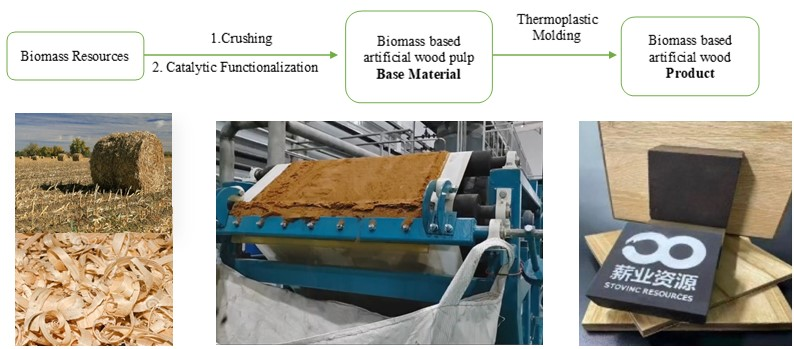
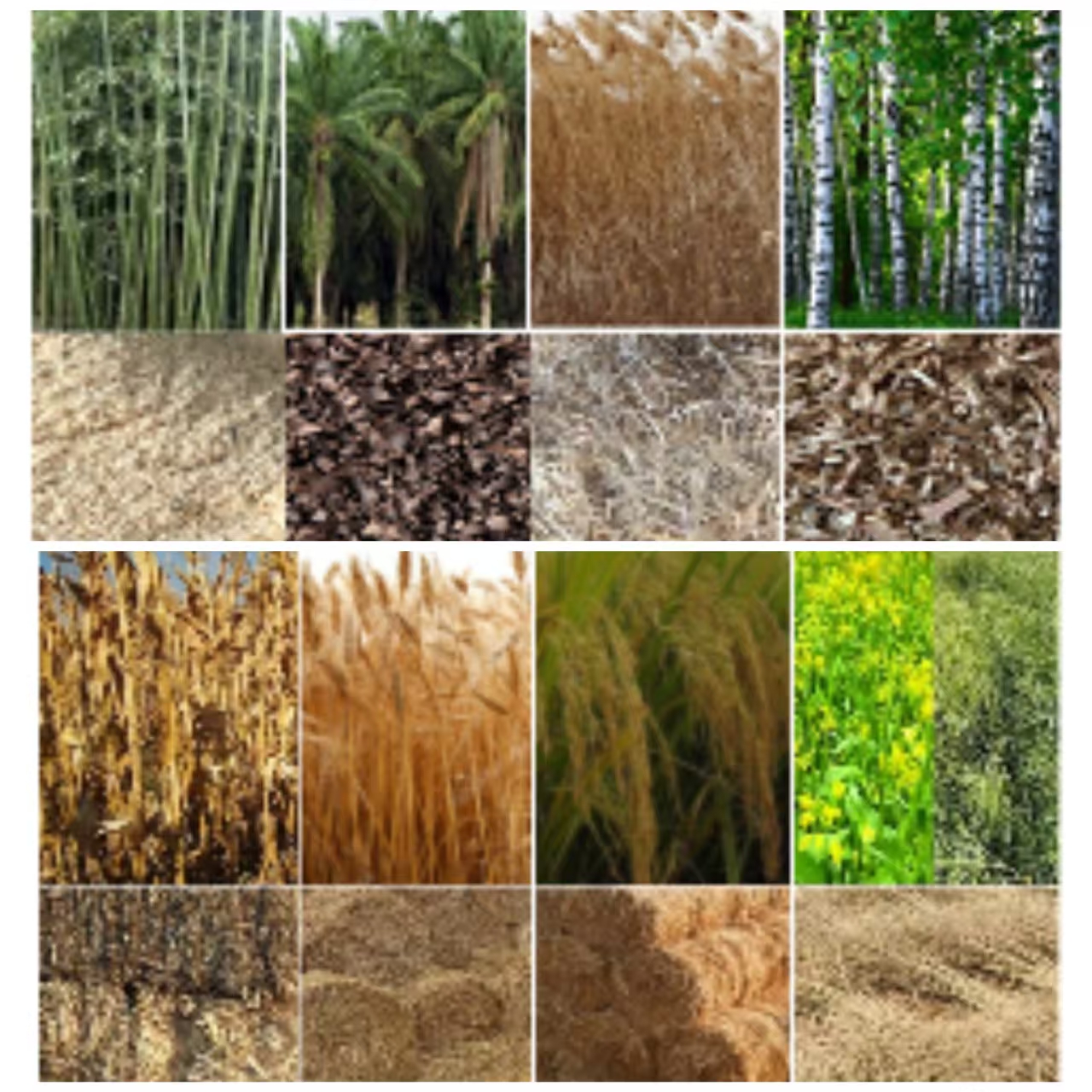
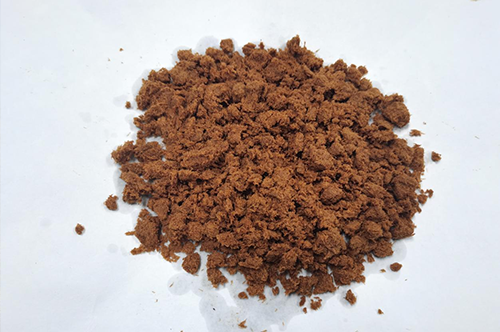
- Stovinc Resources has developed the world's first advanced manufacturing technology inproducingadhesive-free artificial engineered wood with 100% utilization of biomass feedstocks. The production process consists of: (1) catalytic functionalization of milled whole biomass fibers in an aqueous system, yielding a pure biomass-derived intermediate known as “薪素质TM” (PEM) pulp. Feedstocks are inclusive of all lignocellulosic species, crop residues from corn, wheat, barley, rice, beans,cotton and tobacco, as well as non-crop plants such as reed, bamboo scraps and chips, and wood scraps and chips. A major advantage of Stovinc Resources technology over the currently prevailing technologies is distinguished by the 100% utilization of biomass without rejection of structurally weak parts; (2) thermal press-molding of the pulp into finished products through self-polymerization, eliminating the need for adhesives. A pilot-scale production facility with a capacity of thousands of tons per year has been successfully demonstrated.
- Stovinc Resources composite materials: The self-adhesive property of the PEM pulp enables the production of composite materials throughformulation that incorporate mineral and carbon fibers. A a range of designable composite materials with exceedingly superior strength have been produced.
- Biobased chemicals: By changing the catalyst and the processconditions, Stovinc Resources has developed technologiesto co-produce highly valued chemicals and materials using biomass as raw materials. Monomers of bifuran, biphenyl and bisphenols have been invented for future generation of high-performance polymers. The new technology allows for integrated production of chemicals and materials according to market demand, effectively realizing the 100% utilization of biomass resources.
- Automated molding process technology: In response to varying product performance requirements, automated processes are being developed as a key aspect of future production technology.
Core Technologies
Stovinc scheme· Leading green manufacturing
No synthetic additives, no pollution, and biodegradable
With years of scientific research and technology development experiences, Stovinc Resources has developed a number of novel technologies, which transform raw materials such as herbal straw, wood and bamboo waste and recycled cotton fabrics into new self-polymerizing PEM materials without synthetic additives, as well as a number of high value-added bio-based chemicals.
☑100% conversion of raw biomass materials, no waste: the whole process is green with low energy consumption, and has zero pollution from raw materials to products.
☑ Excellent PEM product performance:
※Extremely high structural strength
※No adhesives, zero formaldehyde
※Superior flame retardancy performance
※Low water absorption
※Natural degradation, meeting the requirements of sustainable development
☑Automated molding integration
According to different application requirements, a complete technical system from mold design, process parameter optimization, molding machinery configuration to automation control is formed to ensure high-efficiency production.
Application Fields
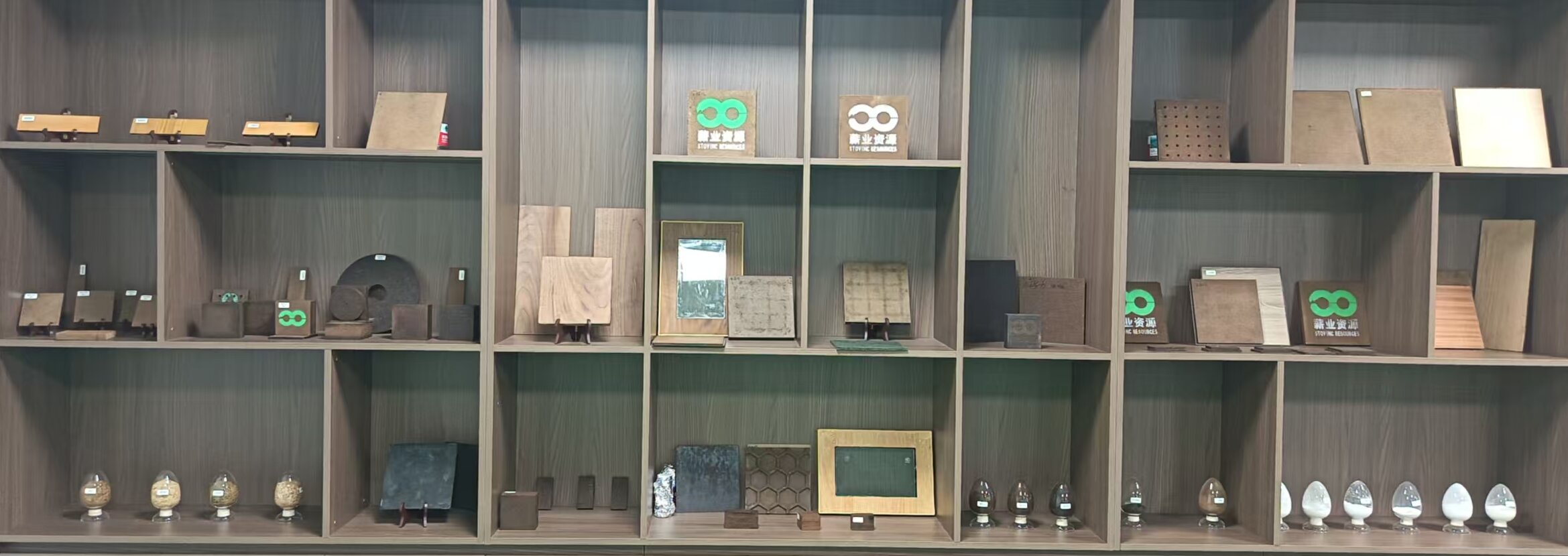
Based on varying product requirements, the company's PEM materials and PEM composite materials are produced utilizing advanced technology to develop innovative, eco-friendly materials featuring high strength, wear resistance, thermal insulation, adjustable density, water resistance, sound insulation, and flame retardancy. These materials are applicable across multiple sectors, including engineering construction, eco-friendly furniture, sustainable home decoration, vehicle and marine manufacturing, aircraft production, advanced packaging, and appliance housings. Notably, these materials offer significant advantages such as environmental sustainability, biodegradability, reduced ecological impact compared to chemically synthesized materials, and efficient resource utilization. They present viable alternatives to conventional plastic and wood products.


High-value utilization of biomass resources—materials industry
Without rejecting biomass raw feedstock, whole biomass is directly crushed and catalytically functionalized and is molded without adhesive.
The first in the world, no similar product on the market.
Advantages (taking wood board properties as an example):
High strength
No formaldehyde release
Flame retardant
Low water absorption
Potential Applications:
Adhesive-free engineered wood for building structure
Replace some high-strength plastics
High strength thermal insulation materials
The PEM base materials can be used to produce composite materials
Turn waste into treasure
Wide range of raw materials
Complete utilization
Green process
Biodegradable products
Stovinc Resources product portafolio in renewable chemical industry
Hemicellulose
Xylooligosaccharide
Xylose
Xylitol
Furfural
Furfuryl alcohol
Furan
Tetrahydrofuran
2-Methylfuran
2-Methyltetrahydrofuran
Lignin
Phenolic monomers
Oligomeric lignin (environmentally friendly flame retardant)
Lignin coatings
Lignin adhesives
Flexible multi-carbon bridged bisphenol monomers
Modified Cellulose
New adhesive-free plastic substrates
Can be used in composite materials
Bifuran dicarboxylic acid
Biphenyl p-dicarboxylic acid
Innovative direct syntheses of dimethylbifuran and p-dimethylbiphenyl
Resources
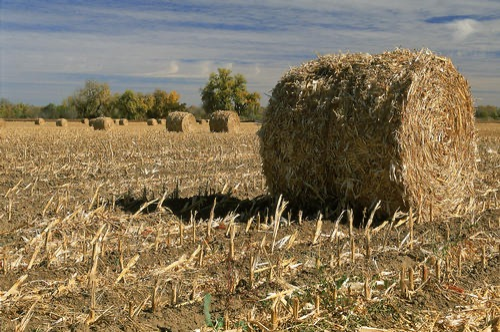
Nature provides mankind with a wide variety of renewable biomass resources, rich in lignin, hemicellulose, cellulose as the natural polymers. These polymers are the primary components of the cell walls of plants, where the cellulose fibrils are embedded within the amorphous matrix of lignin and hemicellulose. These three polymers are tightly integrated to form lignocellulosic structures. Herbaceous plants come in many varieties, including major crops like rice, wheat, barley, oats, corn, and sorghum; economic crops such as cotton and tobacco; non-crops like reed, bamboo, and woody plants, such as pine, spruce, fir, maple, poplar, camphor, rubber, banana, sweet-scented osmanthus, and magnolia. Shrubs like tea, rose, and hibiscus, as well as semi-shrubs like peony, also contain lignin, hemicellulose, cellulose as the natural chemical structural units in varying amounts.
Agricultural straw and waste materials from bamboo and wood processing industries represent abundant renewable energy and carbon resources. In China, approximately 1 billion tons of agricultural straw are produced annually. The practices of burning them whether in the field and or in biomass pellet fuel result in significant carbon dioxide emissions. The anaerobic biogas production from agricultural straw, an outdated technology from the previous century, poses serious safety risks and has since been phased out. Returning agricultural straw to fields is still strongly encouraged by the government as it effectively enhances soil organic matter. However, the persistence of pests and diseases in the straw over winter contributes to an increasing threat of crop damage the following year.
Guided by the national ban on agricultural straw burning and supported by contingent policies, significant progress has been made in both basic and applied research on the conversion and utilization of biomass resources. However, there is still no precedent for industrializing a fully green, high-value utilization technology that produces no waste, has no process-related pollutant emissions, and results in biodegradable products. Drawing on our academic expertise and experience in developing various biomass conversion and utilization technologies, Stovinc Resources has pioneered several global leading technologies. These technologies convert renewable resources, such as straw from herbaceous plants, bamboo and wood processing waste into new self-polymerizing materials (i.e., biomass based engineered wood) or high-value chemicals without the need for synthetic additives.

Biomass Resources
? Nature's Gift · A Green Future
Unlimited potential for a sustainable future in materials and chemicals using renewable biomass resources
Plants, formed through the sunlight activated reaction of carbon dioxide and water, function as a natural mechanism for environmental carbon reduction and storage. The nature supplies a wide range of renewable plant biomass resources, including crop residues, timber, and bamboo. These materials display varied physical properties—including rigidity, flexibility, strength, and toughness, which also vary across various parts of the same plant.
Utilizing waste agricultural and forestry biomass resources represents an effective approach to decreasing global dependence on fossil fuels while promoting carbon neutrality within both the energy and materials sectors. This strategy aligns with the increasing demand for sustainable and health-conscious products. However, despite decades of research efforts worldwide, significant obstacles remain due to the substantial variations in the physical and chemical properties of plant cell walls among different species. The three main constituents—cellulose, hemicellulose, and lignin—not only exhibit variations in their abundance but also in their structural characteristics. These polymers are intricately interconnected in addition to the presence of hetero-element components and minerals within the matrix, collectively impeding the development of a unified, single-step process capable of efficiently converting all forms of biomass.
Stovinc Resources’ technology eliminates the long standing reliance on the use of fossil-derived adhesives or chemical additives in the production of engineered wood and laminated construction materials. A novel technical strategy was successfully demonstrated by modifying the microstructural compositions of raw biomass species through an innovative catalytic treatment, making the treated fibers capable of being press-molded into structured parts at mild temperatures. This technology allows the full utilization of all biomass resources without any waste, and the process does not generates any emissions.
In the development of biobased chemicals, a catalytic conversion technology developed by Dr. Zhang's team converts hemicellulose in biomass into furanic chemicals, including functional bifurans, their derivatives, and further to biphenols.
The lignin structure in biomass is catalytically hydrocracked to either low molecular weight (200-500 Daltons) compounds or selectively to phenolics. These compounds have been developed to biobased adhesives and to multicarbon chain bridged bisphenols, which are potential alternatives to bisphenol F and bisphenol A.
The cellulose in biomass is converted to multiple high-value chemicals or pharmaceutical intermediates, such as beta-oligomers of glucose.
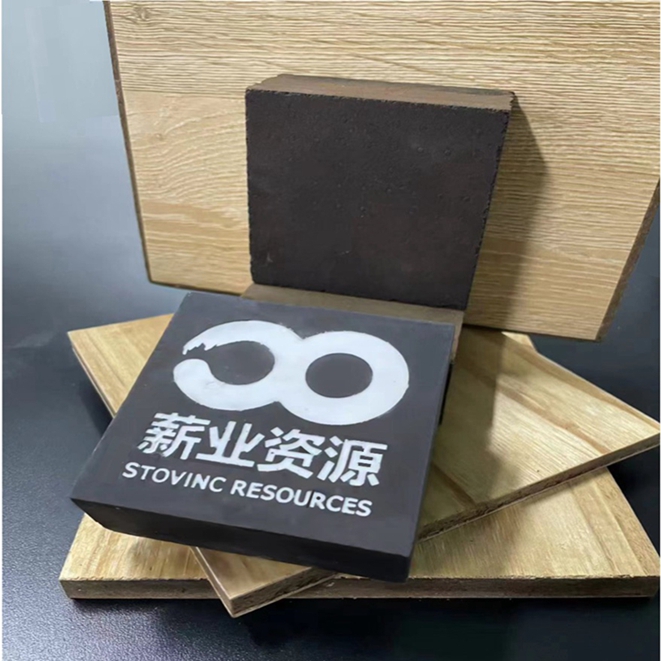
In July 2024, Stovinc Resources, led by Dr. Zhang, demonstrated the technical success in producing adhesive-free artificial wood at the scale of a thousand tons per annum. An independent certified testing agency released official reports on the artificial wood samples made from various types of straw supplied by Stovinc Resources. The reports found that the artificial wood materials did not contain harmful substances; specifically, no formaldehyde was detected when assessed against standards such as the ENF level in the European standard GB/T39600-2021 and the F★★★★ level in the Japanese industrial standard JISA5908-2003, both of which set strict formaldehyde limits. Due to characteristics including environmental attributes, designable density, high strength, and biodegradability, research and development is underway to investigate potential applications for straw-based artificial wood technology in industries such as home furnishing, decorative materials automotive, high-speed rail, aviation, and shipbuilding.
This pioneering artificial wood technology, developed from biomass resources, bridges a gap in materials for being environmentally friendly, non-plastic, non-ceramic, non-metallic, glueless, odorless, and formaldehyde-free, with properties including high strength, heat insulation, and flame retardancy. It offers the potential to substitute for wood and plastic products. The new biomass-based materials are projected to have broad market applications in the areas of "replacing plastic and wood," which could lead to associated industrial changes and support efforts towards low-carbon development and ecological benefits.
Technological innovation and Progress

Fill the gap in the materials industry
This technology fills the gap in the materials industry by modifying biomass straw and then forming it through one-time hot pressing.

Using biomass as raw material
This product is made from biomass as raw material, which is fully utilized without waste. It is a high-strength material, non adhesive molding, environmentally friendly, and biodegradable.

Integrated modification technology for waste biomass
Used for one-time production of biomass based shaping materials. Innovative and advanced, environmentally friendly and waste free, efficient transformation, and extensive substitution.